L o a d i n g

Kyro Construction

Construction management dashboard experience redesigned

Web Dashboard
Category :
My Role
Senior Product Designer
88%
Task success rate increased from 57%
50%
Time to first decision reduced across roles

About the Project

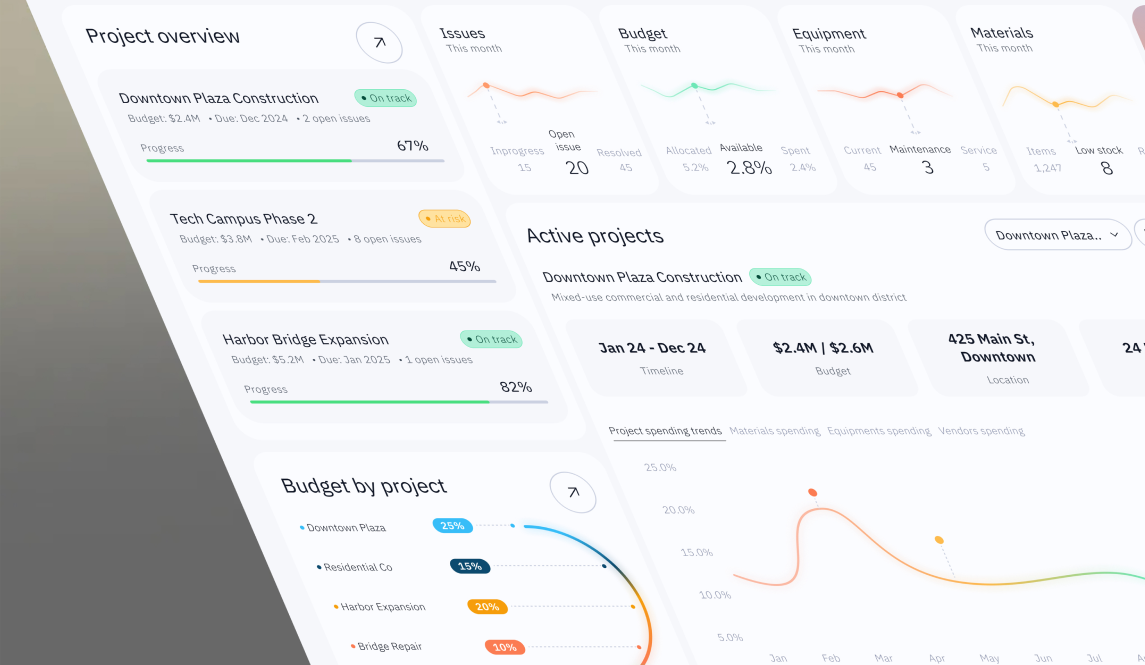
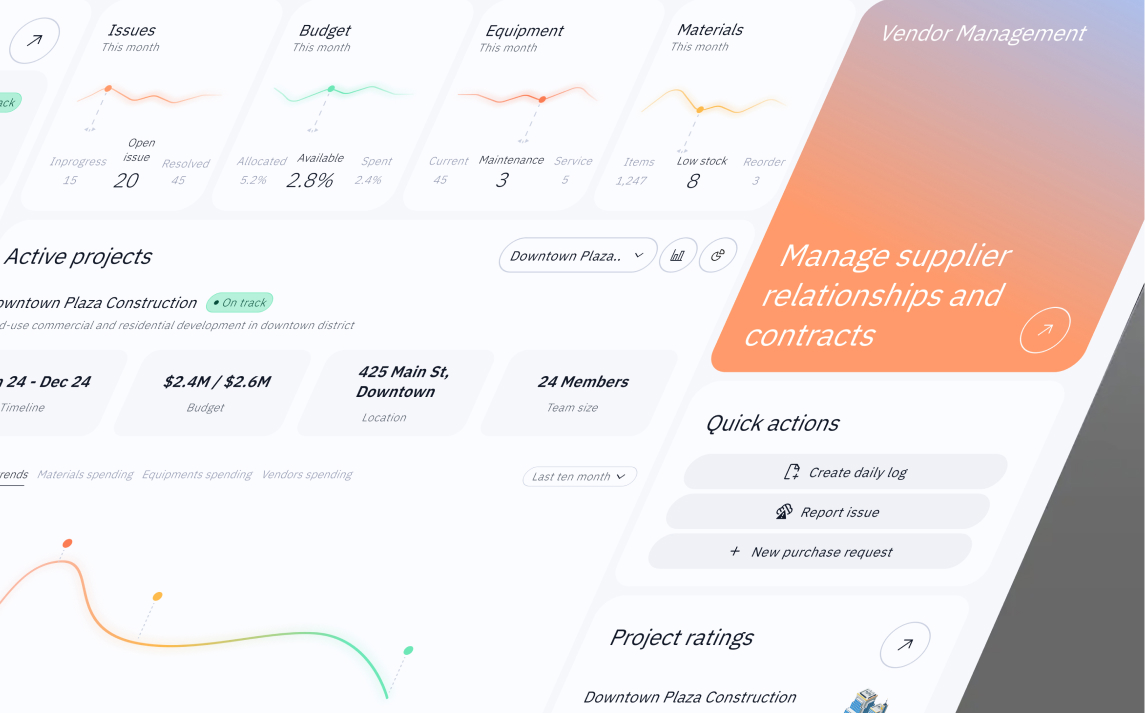
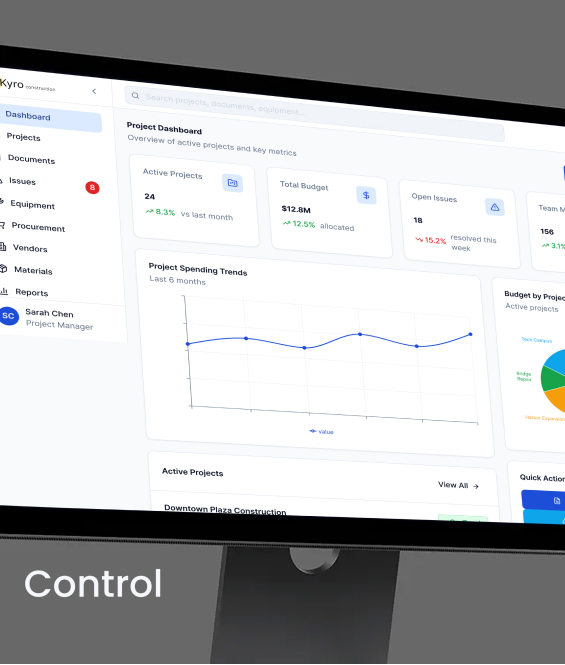
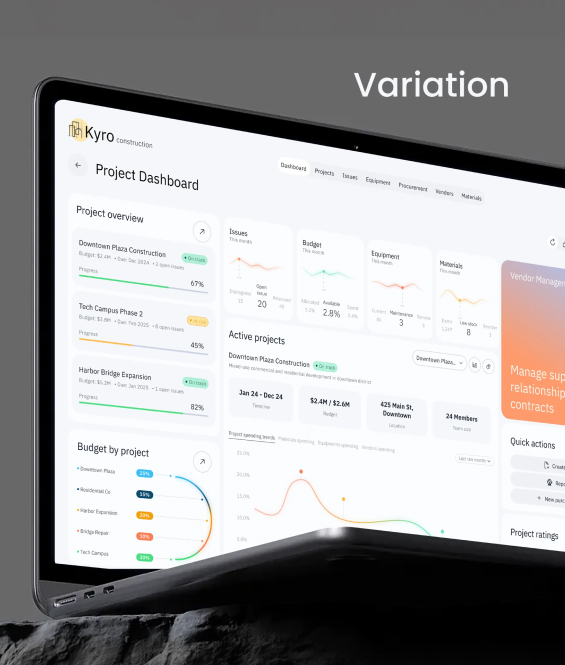
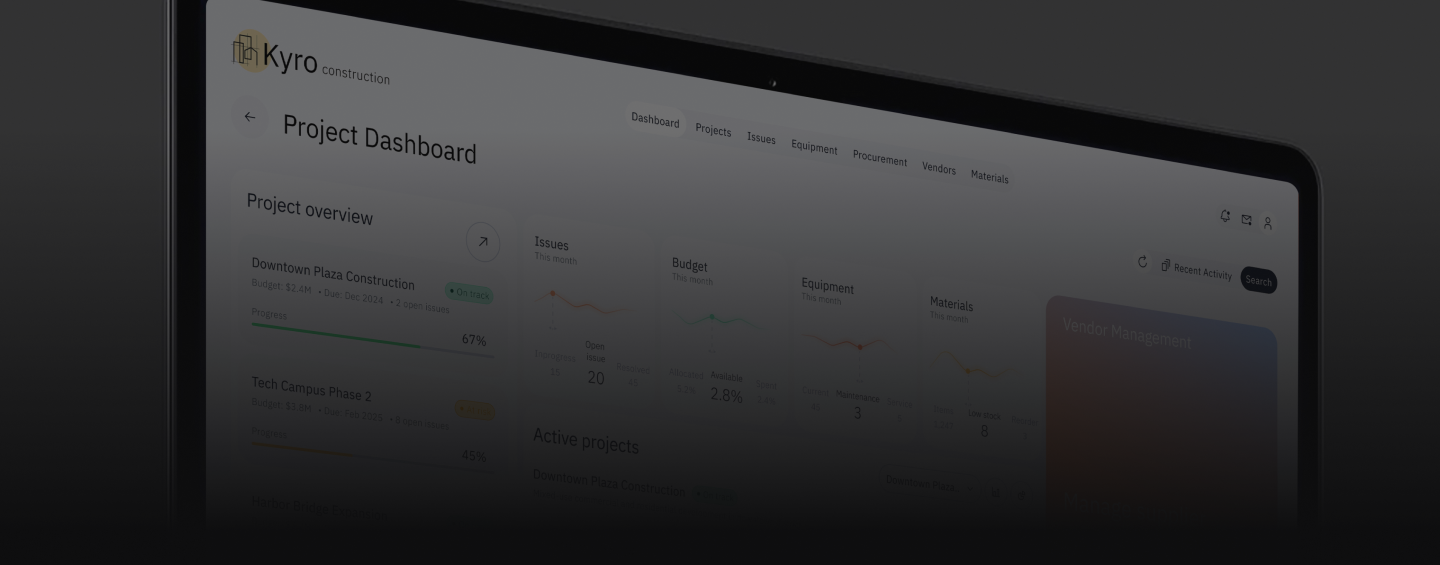
Kyro is a construction management dashboard used to monitor active projects, budgets, equipment, materials, vendors, and risks across multiple construction sites.

The goal of this redesign was not visual refresh. It was to help construction professionals understand what matters now and act confidently, without relying on calls, spreadsheets, or workarounds.

User Challenges

Through early research and stakeholder discussions, we identified that users:

  • Could see large amounts of data but struggled to prioritize
  • Hesitated before taking action
  • Didn’t fully trust project, financial, or document data
  • Frequently double-checked information via phone calls or WhatsApp
  • Felt overwhelmed by dashboards where everything looked equally important

This was a decision-making problem, not a usability or navigation problem.

Design Process

We followed a problem-first, decision-driven design process, inspired by the Double Diamond, but adapted for an enterprise product: Discover: Understand how professionals think under pressure Define: Identify where hesitation and confusion occur Develop: Design for clarity, hierarchy, and confidence Validate: Confirm that decisions happen faster and with less doubt

We intentionally avoided heavy experimentation early on and focused on behavioral diagnosis first.

Insights from research informed timeline-first user flows and a narrative-driven information architecture. Designs were iterated through task-based validation before moving to high-fidelity UI. AI interactions were carefully designed and tested as an assistive layer, ensuring transparency, non-intrusion, and trust - especially for senior clinicians operating in high-stakes environments.
UX Methodologies

  • Moderated usability testing To observe hesitation, confidence, and decision-making
  • Task-based scenarios To test real construction workflows, not isolated screens
  • Heatmaps & session recordings To understand attention and visual hierarchy effectiveness
  • Rapid user interviews To capture trust, doubt, and mental models
  • Lightweight metrics (time to decision, task success) To quantify clarity without vanity metrics
  • Bayesian analysis & MDE (used selectively) To communicate confidence to stakeholders, not to drive design

We intentionally did not rely on cohort analysis or CRO methods, as Kyro is a mission-critical enterprise tool, not a consumer growth product.

Results

  • Measurable Outcomes:
  • Task success rate increased from ~57% to ~88%
  • Time to first decision reduced by more than 50% across roles
  • HProject Managers and CFOs made decisions without external confirmation
  • Site Engineers trusted document versions without rechecking
  • Maintenance teams identified issues faster with less navigation

Qualitative Outcomes:

  • Users described the redesigned dashboard as clear, calm, and trustworthy
  • Decision-making moved inside the product instead of outside it

Qualitative confidence validation showed strong adoption signals: 17 of 20 doctors reported higher confidence, 7 of 8 senior doctors confirmed real-world adoption intent, and junior doctors reported reduced anxiety during follow-ups.