L o a d i n g

OmniMed Healthcare

Doctor & Patient dashboard experience redesigned

Web Dashboard
Category :
My Role
Senior Product Designer
74%
Reduction in time to patient understanding
92%
Strong adoption rate by senior doctors

Context of the Project

OmniMed is a hospital-grade clinical dashboard used by doctors during live patient consultations. While the existing system stored comprehensive patient data, it failed to support how doctors actually think and make decisions under time pressure. Information was fragmented across sections, forcing doctors to manually reconstruct patient history during follow-ups and complex diagnoses.

The project focused on redesigning the dashboard into a doctor-centric clinical workspace that prioritizes clarity, narrative continuity, and decision confidence. The goal was not to add more data or automation, but to reduce cognitive load, support diagnostic reasoning, and enable faster, more confident clinical decisions - especially for senior doctors operating in high-stakes environments.
Problem to Solve

Doctors struggle to quickly build a clear mental model of a patient’s medical journey because clinical information is fragmented, unstructured, and lacks narrative continuity. When diagnoses are uncertain or treatments fail to show improvement, doctors must rely on memory, external references, or informal consultations, increasing cognitive load and decision risk. Additionally, AI systems that attempt to act as decision-makers rather than transparent assistants reduce trust, while time pressure during consultations leaves little room for deep reading or manual cross-checking of data.

Design Process

The project followed a cognition-driven UX approach using the Double Diamond framework, focusing on how doctors think and make decisions under time pressure. Early brainstorming and research reframed the problem from data access to clinical understanding. We conducted qualitative research with doctors across experience levels and performed usability audits on the existing dashboard using heuristic evaluation, cognitive walkthroughs, and think-aloud analysis to identify decision delays, context loss, and reliance on external tools.

Insights from research informed timeline-first user flows and a narrative-driven information architecture. Designs were iterated through task-based validation before moving to high-fidelity UI. AI interactions were carefully designed and tested as an assistive layer, ensuring transparency, non-intrusion, and trust - especially for senior clinicians operating in high-stakes environments.
UX Methodologies

  • Task-based usability testing
  • Comparative before/after analysis
  • Cognitive walkthroughs
  • Think-aloud sessions
  • Qualitative confidence validation

These methods were chosen because they directly measure cognition and confidence, which matter most in clinical environments.

What we did not claim:

  • Statistical prediction
  • Bayesian probability
  • Growth optimization

Because this product does not need those.

Results

  • Key outcome: The redesigned dashboard measurably reduced cognitive effort and increased clinical decision confidence by restoring narrative continuity across patient data.
Metric
Old Dashboard
Redesigned Dashboard
Avg. time to patient understanding
3–4 minutes
30–45 seconds
Visible hesitation during review
High
Low
Re-reading / backtracking
Frequent
Minimal

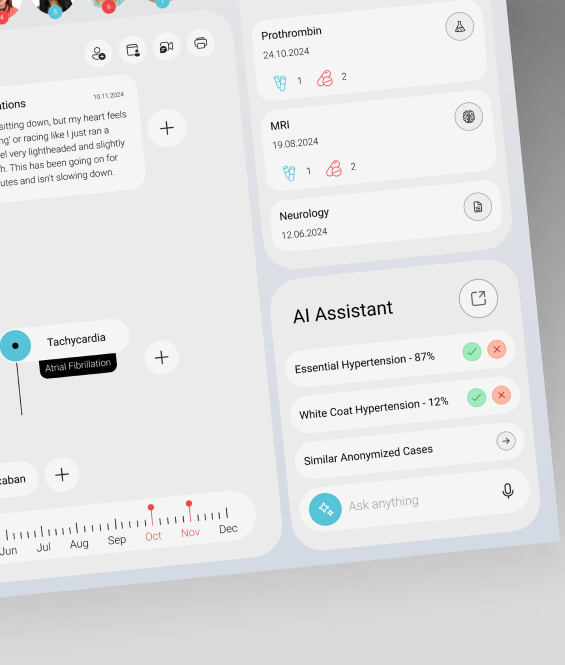
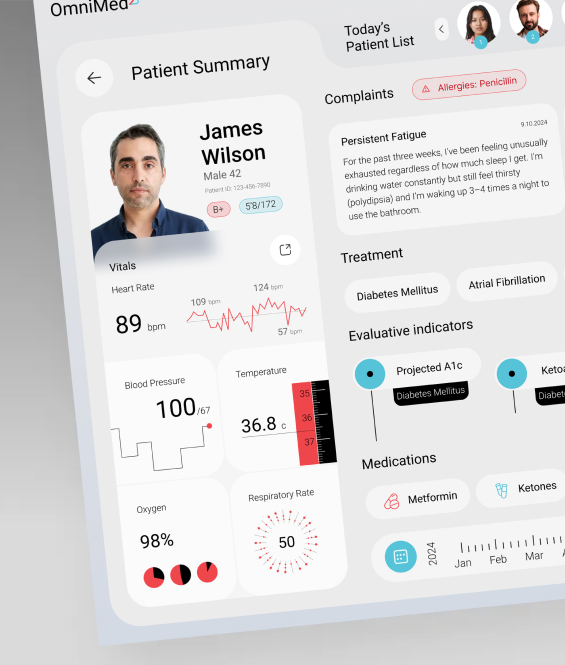
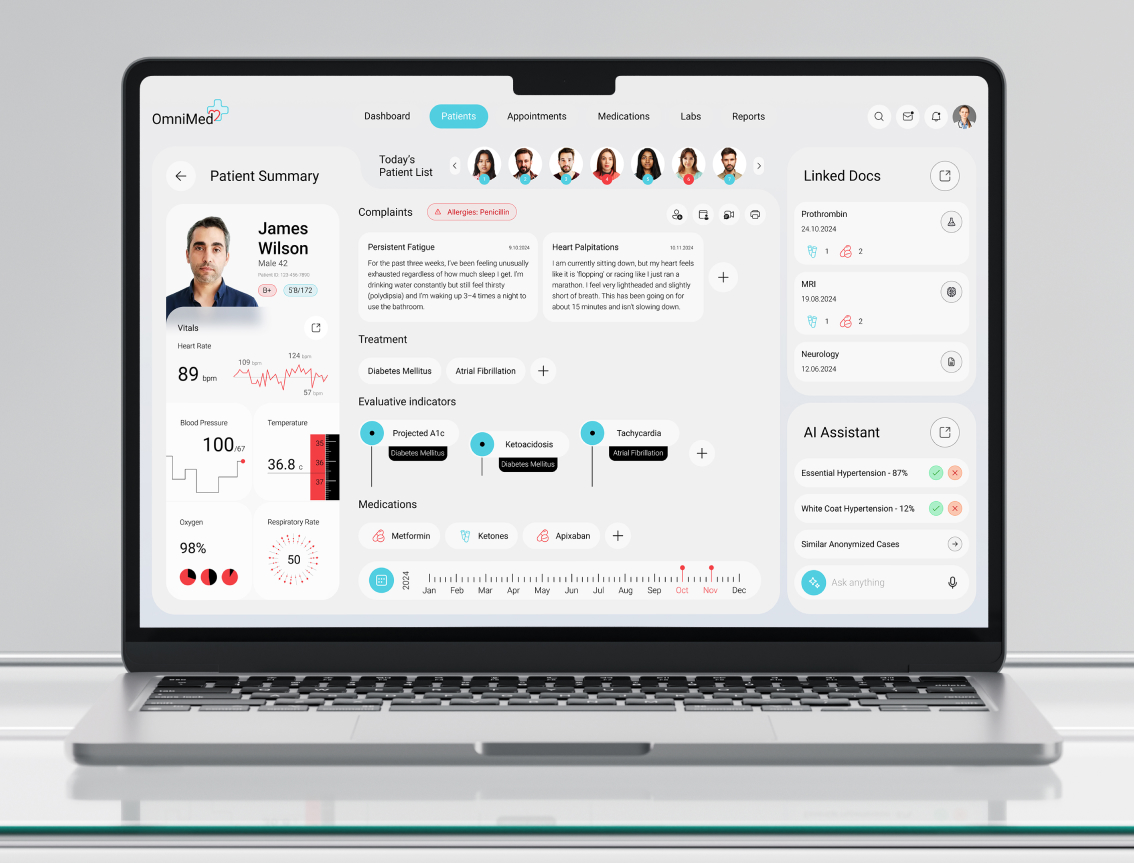
A within-subject comparative analysis confirmed that the patient snapshot clarified “who,” the timeline explained “what happened,” evaluative indicators showed “did it work,” and AI assist supported “what next.”

Qualitative confidence validation showed strong adoption signals: 17 of 20 doctors reported higher confidence, 7 of 8 senior doctors confirmed real-world adoption intent, and junior doctors reported reduced anxiety during follow-ups.